Land
The climate cup
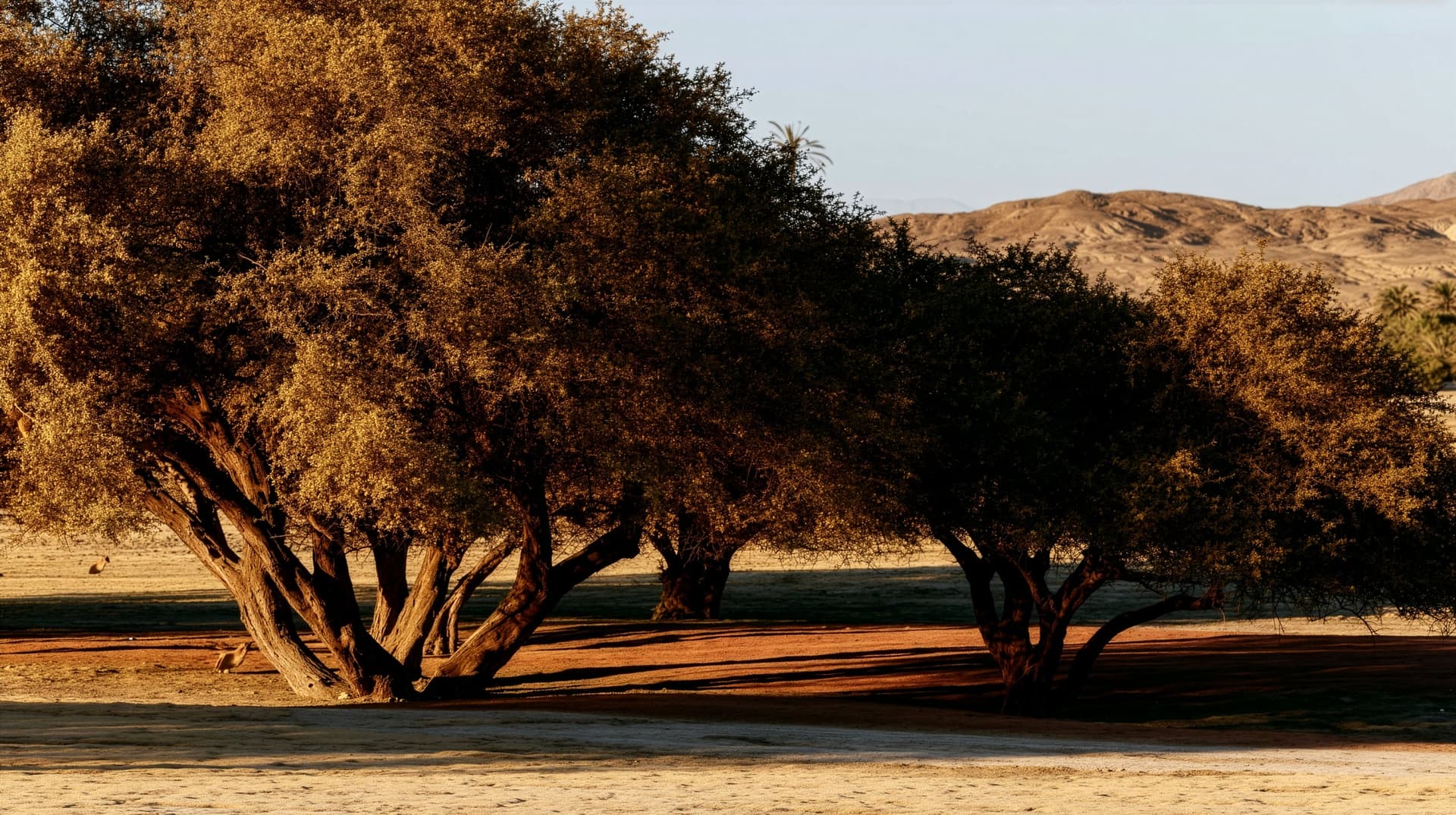
The bosque seco of northern Peru is a dry forest in the strictest sense. The rains come twice a year, sometimes once, sometimes not at all. The soil is alkaline and salty from the Pacific air that drifts in from the west. The temperature drops twenty degrees between noon and midnight. The sun is the constant. Most crops die in conditions like these. A few don't.
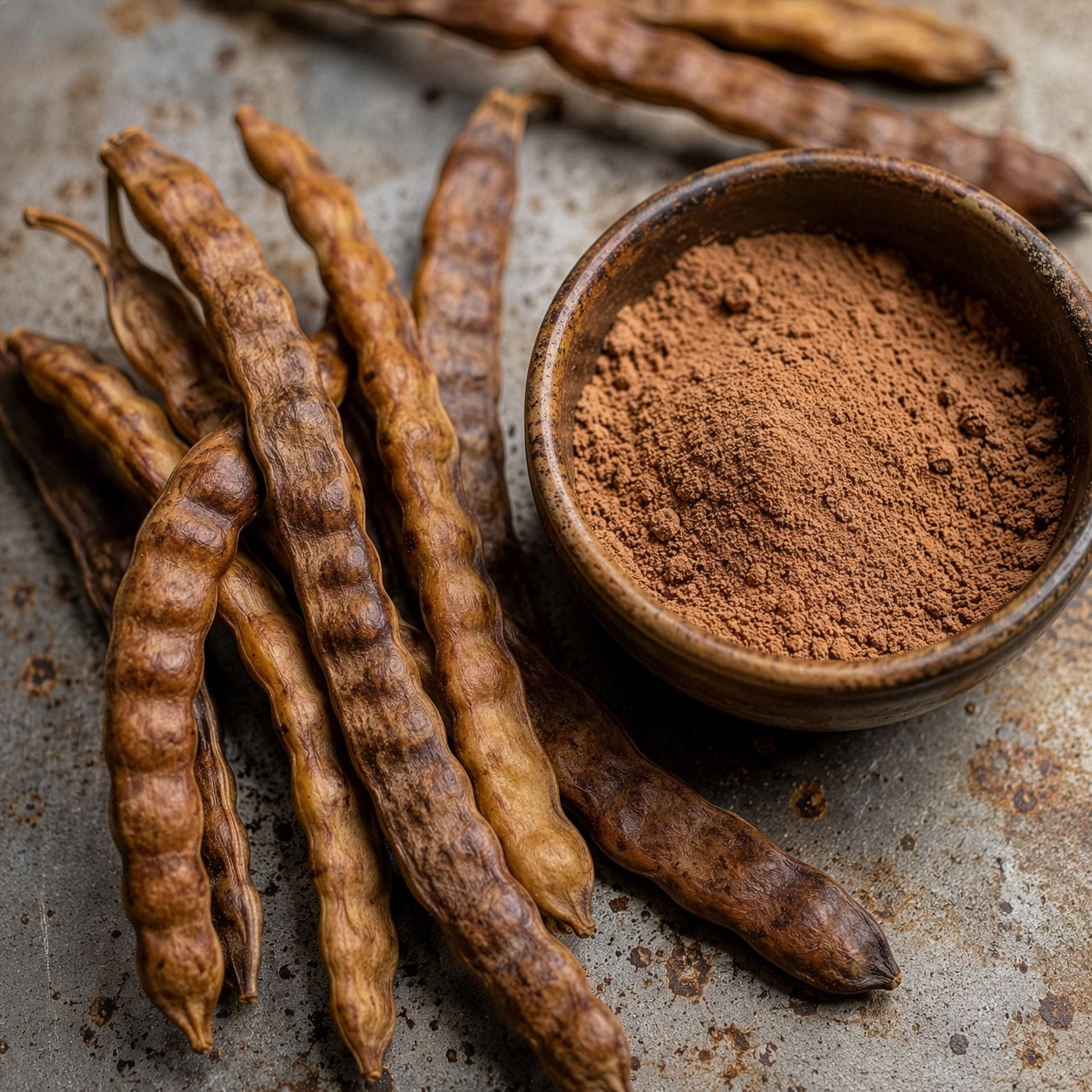
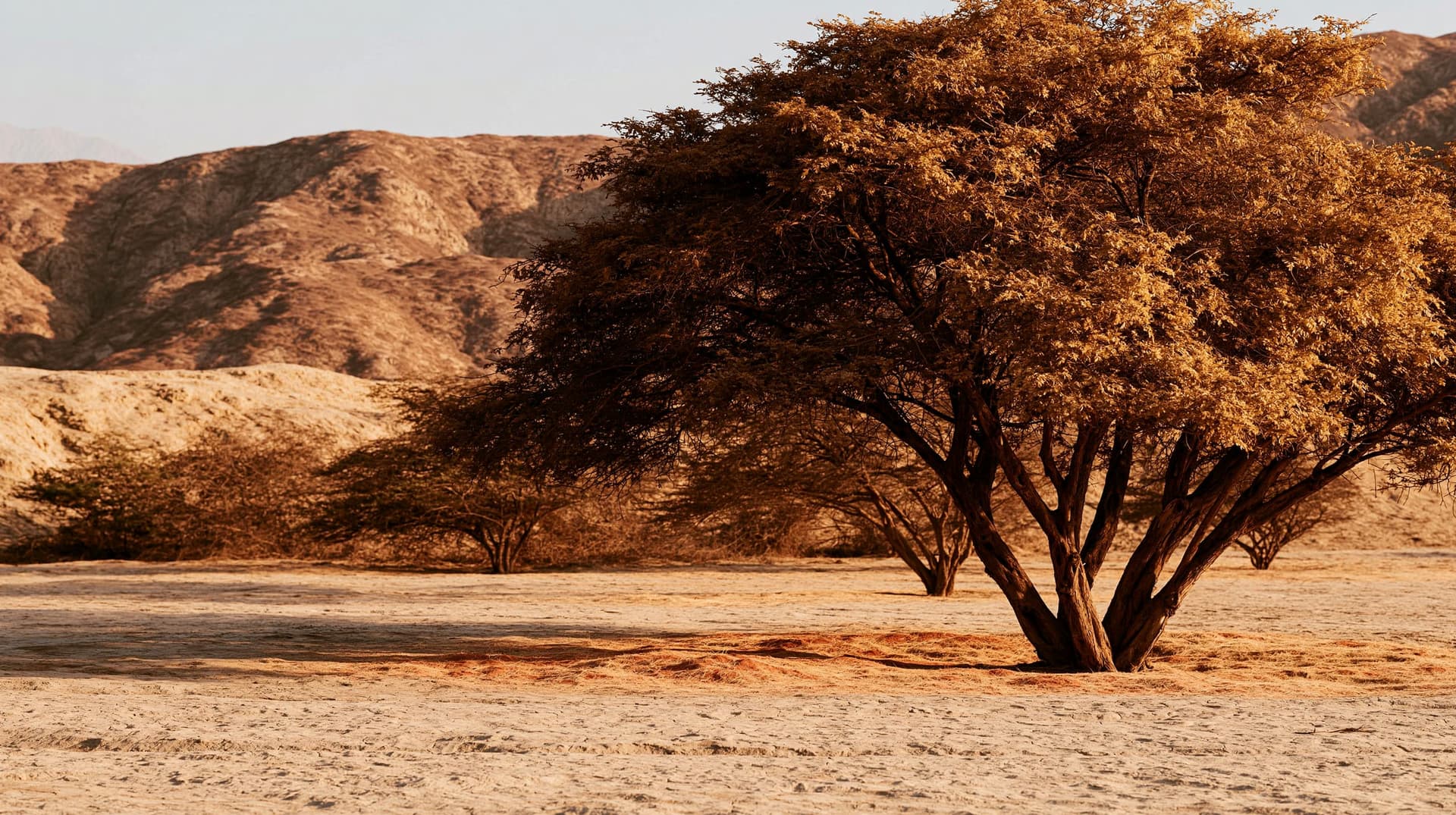
The mesquite is one of the ones that doesn't die. Its tap root reaches forty or fifty metres underground, sometimes more, to find water no surface crop can find. As a legume, it has root nodules where bacteria fix nitrogen from the air directly into the soil. The tree improves the land it grows on. Where it stands, other plants take root in soil that the mesquite has enriched.
The bosque seco is not a forest that exists in spite of the algarrobo. It exists because of the algarrobo. The tree's roots stabilise the soil. Its nitrogen fixation feeds the understory. Its canopy shelters smaller life from the sun. The birds that eat its pods spread its seeds. The communities that gather its pods depend on its harvest. Take the algarrobo away, and within a generation the dry forest becomes a desert. The tree is the forest.
Coffee has the opposite biology. Arabica, the bean most coffee drinkers drink, needs a narrow band of altitude, temperature, and rainfall to ripen properly. Outside that band, the plant either dies or produces beans that taste wrong. The band is narrow. It has always been moving. Now it is moving faster than the growers can follow.
Take the algarrobo away, and within a generation the dry forest becomes a desert. The tree is the forest.
As global temperatures rise, the band moves higher. Growers follow it up the mountain, until there is no mountain left. Fungal rust, once contained to specific elevations by cold, is spreading into the new warmer zones. By mid-century, the suitable area for Arabica is projected to shrink by roughly half. There is nowhere new for it to go.
The mesquite has the opposite of a problem. It thrives in heat, in drought, in alkaline soil, the very conditions that are spreading. Where Arabica's growing range is shrinking by the decade, the algarrobo's is stable or expanding. The same warming that makes coffee harder to grow makes the mesquite easier. This is not luck. The mesquite evolved to live where it lives. It is the reason the tree has lived as long as it has.
The mesquite we use is not grown on a plantation. No land was cleared for it. It grows wild in its native habitat, gathered by hand by communities working under SERFOR's protection. Every cup is from an ecosystem that has been doing this for itself for centuries. The land is not being managed for our cup. We take what the tree gives, the way the people of Piura have taken it for centuries.
Climate stress is becoming structural rather than exceptional. The food we choose either makes the problem heavier or lighter. Mesquite has been adapting to dry land for as long as dry land has existed. It will keep adapting. The cup it makes will keep coming. There is room on a kitchen counter for an ingredient like that.